

Incoming-material inspection
Check raw-material names, batches and formulation uses; evaluate appearance, viscosity, pH, conductivity or color response according to material requirements.
Search 130 product-catalog series and check product codes and original page numbers.
Go to product catalog →02View original sample information on heat aging, dry/wet rubbing, white ink, color and washing.
View tests and conditions →03Product overview, 2026 model catalog, DTF technical documents and business consumables catalog.
View document center →Check raw-material names, batches and formulation uses; evaluate appearance, viscosity, pH, conductivity or color response according to material requirements.
Sample through the process, monitoring pigment dispersion, particle size, filtration and physical-property changes.
Evaluate liquid properties alongside printing performance, adding heat-aging, settling, rubbing, washing or transfer tests where appropriate.
Check model, color, batch, packaging, sealing and delivery documents, linking to the corresponding finished-product inspection.
Collect equipment, printhead, substrate, environment and problem-proof details, bringing customer usage conditions into technical evaluation.
Distinguish material, dispersion, filtration, storage and application factors; after corrective measures, retest under the same conditions.
Specific items, methods and acceptance conditions depend on the corresponding ink series.
Different indicators answer different questions. Record samples, methods and conditions, then interpret results with actual equipment and materials.
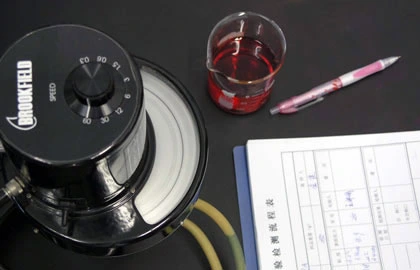
Evaluate ink flow resistance and ink-supply compatibility. Record temperature, measurement method and reading, then interpret them against the printhead and ink-supply system requirements.
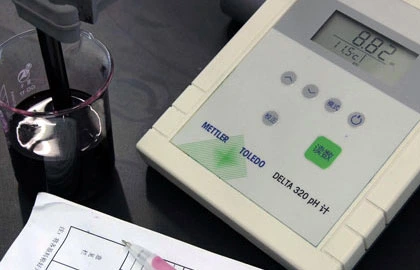
Measure the ink's acid-alkaline state and evaluate formulation stability for the product system and measurement conditions.
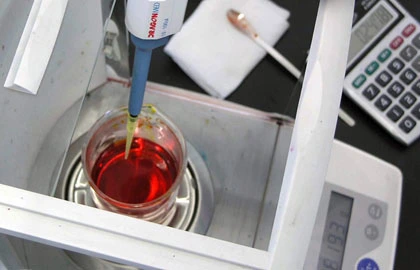
Use conductivity measurement to observe ionic response and batch differences and record the test temperature.

Measure pigment-particle distribution and changes before and after aging, focusing on dispersion, agglomeration and coarse-particle control.
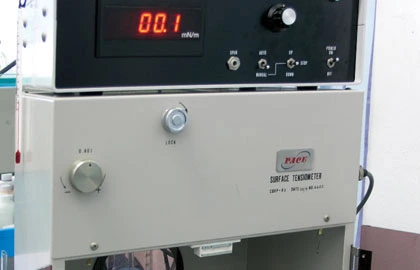
Evaluate wetting and droplet behavior. Distinguish static and dynamic measurements, state the temperature and method, and combine them with actual jetting and substrate tests.

Use it to compare spectral absorption and colorant response; state the dilution, path length and reference conditions. Evaluate liquid absorption spectra separately from printed color density.
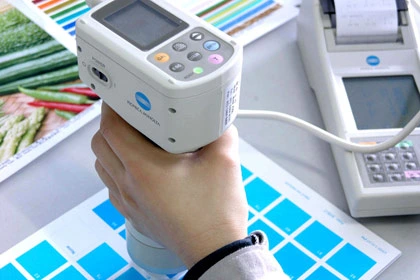
Compare L*a*b*, color difference and color density on the specified media while keeping the illuminant, measurement geometry and printing conditions consistent.

Select the filtration method for the product system and assess insoluble-particle control, ink-supply status and jetting performance.

Use the actual substrate and curing conditions, state the dry/wet state, load and number of cycles, and compare staining or surface damage.

Use color blocks, fine lines and adjacent colors to observe boundaries, uniformity and bleeding; state the print mode and media.

Evaluate washing, water resistance or other durability for the intended use. State the sample and process; results apply only to the listed conditions.

Use storage observations and heat-aging tests to compare settling, separation and physical-property changes in support of product-stability evaluation.
Full printer model, printhead, color channels and current ink supply method.
Substrate, coating, pretreatment and actual material samples.
Print mode, drying, curing and finishing conditions.
Color, adhesion, fastness requirements and problem proofs to evaluate.
Provide product code and use to request corresponding files; existing sample results do not replace model confirmation.
Request technical information →Describe the end use and substrate first, then check equipment, color channels and process. Dyes and pigments serve different equipment/media combinations; polyester transfer and direct disperse printing have corresponding sublimation series. Color alone does not establish interchangeability.
Keep original settings, old proofs and new proofs, recording paper, equipment, print mode and current color management. Discuss ICC or setting changes for the specific ink and media.
Provide color/white ink models, PET film, hot-melt powder, print mode, curing and heat-press conditions, and retain problem proofs. Verify the combination rather than drawing conclusions about every cause from one ink or one image.
Describe fabric composition/base color, pretreatment, printing and curing conditions. Evaluate color, feel, adhesion and washing on actual garment samples; confirm parameters for the corresponding model and material.
Record transfer paper, fabric, print configuration and heat-fixation conditions, retaining both printed paper and transferred fabric. Review materials, equipment and transfer steps individually; do not copy temperatures and times from other products.
First check the current ink system, printhead, ink path and seals. Confirm compatibility and purpose separately for cleaning and protection products; unconfirmed mixtures, soaking methods or fixed intervals must not become universal procedures.
Request current product and safety information for the specific model and check packaging, batch and supply requirements. If separation, settling or abnormal conditions appear, record them and contact the technical team rather than deciding usability by appearance alone.
Specify product code, color, use, project requirements and document type. Technical, safety and batch-quality documents serve different purposes. Check model, version, scope and batch after receipt; a document title does not replace applicability verification.


